White Bean Extract - A Classic, Upgraded by HSN
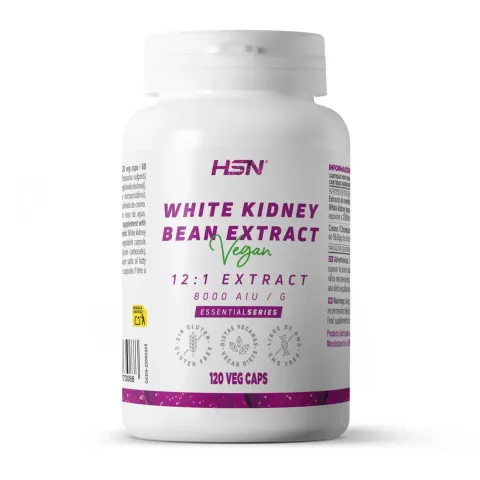
White Bean Extract (12:1) 500mg from EssentialSeries is a food supplement made from white bean and chromium.
Designed for those looking to naturally support the normal metabolism of macronutrients (thanks to its chromium content). We used an extract 12 times more concentrated from Phaseolus vulgaris seeds, a plant widely studied in nutrition for its characteristic proteins with AI activity. Our extract is formulated with chromium picolinate, a form of chromium with excellent absorption that directly helps maintain normal blood glucose levels. The combination of both ingredients creates a synergistic formula that acts on different nutritional mechanisms, offering a more complete product adapted to various needs.
The result is a clean label product, with a highly concentrated standardized extract, made entirely from high-quality raw materials, and suitable for vegans.
An extract with a lot to offer: Discover it
The science behind Phaseolus vulgaris
Phaseolus vulgaris, commonly known as white bean or common bean, is a legume with a nutritional profile and characteristics of great research interest. Among its components, a protein with an activity called 'AI' stands out, which is key to the nutritional relevance of the extract.
The importance of the extract’s natural activity has been documented in multiple studies (Celleno et al., 2007; Udani & Singh, 2007), highlighting its potential within nutritional strategies aimed at people looking to improve their lifestyle, and more. Because of this, our extract has been developed specifically to have a high density of units (8000 AI/g), ensuring a significant and well-established nutritional effect.
The essential role of Chromium
Chromium is a key micronutrient in the body. Its biological role is fundamental. In its picolinate form, this mineral has superior absorption compared to other mineral salts. We added chromium to the white bean product because it acts synergistically, making it ideal alongside the extract:
- Chromium contributes to the normal metabolism of macronutrients.
- Chromium helps maintain normal blood glucose levels.
HSN quality and guarantees
At HSN, we focus on offering quality products at a fair price. Every extract we use goes through strict internal verification protocols that guarantee its authenticity regarding botanical species identification and its characteristic nutritional content. The White Bean Extract is produced following a controlled process that ensures AI activity remains constant during manufacturing, preserving the natural properties of the concentrated seeds intact.
Botanical identity validation is done using advanced techniques that confirm the extract’s phytochemical profile matches the original plant. Only this way can we guarantee that the product you receive at home maintains its full integrity and offers the highest guarantees of nutritional properties.
This level of demand aligns with our philosophy of total transparency, ensuring you get what you buy, with full information and maximum quality guarantees.
Superior concentration: 12:1 extraction ratio
The 12:1 ratio means that 12 parts of white bean seed are used to obtain one part of the final extract. This concentrated process multiplies the density of its nutrients and guarantees a significant presence of proteins with AI activity (even beyond any standardization). Practically, this translates into a more concentrated formula that, thanks to HSN’s production process guarantees, preserves the protein fraction responsible for its nutritional effect.
Declared activity: 8000 AI Units/g
Each gram of the extract contains 8000 AI units, which is a direct indicator of its nutritional action capacity.
“AI Units” are the standard measure used in scientific literature to quantify the nutritional capacity of white bean extracts (Le Berre-Anton et al., 1997). This standardization ensures product consistency and compliance with quality parameters required by the scientific community.
Suitable for vegans and clean label formulation
HSN’s commitment to ingredient selection is reflected in every detail of this product. Capsules are made exclusively with vegetable hypromellose, a natural polymer derived from cellulose that replaces traditional animal gelatins. This way, we make the extract completely suitable for people following vegan diets.
No allergens, no GMOs, no colorants or aesthetic additives.
Can White Bean Extract be taken with other products?
Yes. It easily fits into a supplementation routine since its nutritional profile allows safe combination with other formulas or compounds, creating interesting synergies without known negative interactions.
When it comes to combinations, there are 2 products that are undoubtedly the most compatible with white bean extract: Chitosan and Green Coffee Extract.
Bibliographic references
- Boron, W. F., & Boulpaep, E. L. (2017). Medical Physiology. Maarssen, Netherlands: Elsevier Gezondheidszorg.
- Le Berre-Anton, V., Bompard-Gilles, C., Payan, F., & Rougé, P. (1997). Characterization and functional properties of the α-amylase inhibitor (α-AI) from kidney bean (Phaseolus vulgaris) seeds. Biochimica et Biophysica Acta - Protein Structure and Molecular Enzymology, 1343(1), 31–40.
- Celleno, L., Tolaini, M. V., D’Amore, A., Perricone, N. V., & Preuss, H. G. (2007). A dietary supplement containing standardized Phaseolus vulgaris extract influences body composition of overweight men and women. International Journal of Medical Sciences, 4(1), 45–52.
- Chambers, E. S., Preston, T., Frost, G., & Morrison, D. J. (2018). Role of Gut Microbiota-Generated Short-Chain Fatty Acids in Metabolic and Cardiovascular Health. Current Nutrition Reports, 7(4), 198–206.
- Layer, P., Carlson, G. L., & Dimagno, E. P. (1985). Partially purified white bean amylase inhibitor reduces starch digestion in vitro and inactivates intraduodenal amylase in humans. Gastroenterology, 88(6), 1895–1902.
- Udani, J., & Singh, B. B. (2007). Blocking carbohydrate absorption and weight loss: A clinical trial using a proprietary fractionated white bean extract. Alternative Therapies in Health and Medicine, 13(4), 32–37.