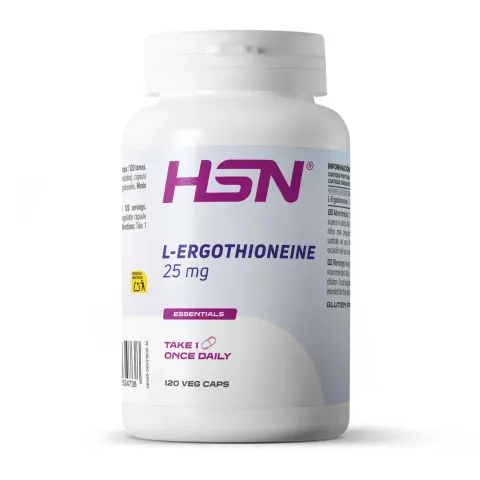
Mega Ergotioneina (25 mg L-ergotioneina), advanced cellular nutrition
Mega Ergotioneina (25 mg L-ergotioneina) de EssentialSeries es un complemento alimenticio formulado con L-ergotioneína, un compuesto natural derivado de la L-histidina que se encuentra de forma natural en algunos alimentos, especialmente en setas y hongos. A diferencia de otros aminoácidos más conocidos, la L-ergotioneína no se utiliza para formar proteínas, sino que se estudia como un compuesto de gran interés dentro de la nutrición celular avanzada.
En HSN hemos desarrollado esta fórmula para quienes buscan un complemento diferente, especializado y fácil de integrar en el día a día. Una opción pensada para acompañar rutinas de bienestar, healthy ageing y cuidado desde el interior, con un ingrediente que destaca por su singularidad y por el interés creciente que está despertando en la investigación nutricional.
La L-ergotioneína es una molécula especialmente interesante porque el organismo humano no la produce de forma significativa. Por eso, su presencia depende principalmente del aporte externo a través de la dieta o de la suplementación. Las setas son una de sus fuentes dietarias más destacadas, pero la cantidad que se obtiene suele ser mínima.
Con 25 mg de L-ergotioneína por cápsula, esta fórmula ofrece una forma sencilla, directa y especializada de incorporar este ingrediente a tu rutina diaria.
Qué hace tan especial a la L-ergotioneína
Su interés está en que reúne varias características que la hacen diferente: es un derivado azufrado de la L-histidina, presenta una estructura química estable y cuenta con una vía de captación celular específica a través del transportador conocido como OCTN1 o SLC22A4.
Este transportador es uno de los aspectos más llamativos de la L-ergotioneína. Mientras muchos compuestos se explican únicamente por su composición o por su presencia en alimentos, la L-ergotioneína se estudia también por la forma en que puede ser reconocida y transportada por el organismo. Esto la ha convertido en un ingrediente de nutrición celular avanzada, con una identidad muy clara y un posicionamiento especialmente interesante para usuarios que buscan un producto específico.
Desde un punto de vista más técnico, la L-ergotioneína se describe como una betaína de tiol-histidina. Aunque pertenece al entorno de los compuestos azufrados, se diferencia de otros tioles clásicos por su estabilidad. En condiciones fisiológicas puede predominar en forma tiona, lo que ayuda a explicar por qué se estudia como una molécula con un comportamiento particular.
Dicho de forma sencilla: la L-ergotioneína es un ingrediente que interesa porque combina origen, estructura singular, estabilidad y captación celular mediada por un transportador específico. Esa combinación es la que la convierte en una opción especialmente interesante dentro de fórmulas de complementos alimenticios, especialmente dedicadas a seniors, y al cuidado a largo plazo.
Un ingrediente pensado para 'healthy ageing' y cuidado diario
El concepto healthy ageing significa cuidar la rutina diaria con ingredientes bien seleccionados, fórmulas transparentes y una visión a largo plazo del bienestar. En ese contexto, la L-ergotioneína tiene un gran valor ya que es un compuesto presente en la dieta, con un uso específico y con un interés creciente en áreas como la nutrición celular, mitocondrial y el estudio del envejecimiento saludable.
También puede resultar especialmente interesante para personas que ya incorporan en su rutina otros ingredientes habituales de salud y bienestar, como coenzima Q10, omega-3, vitamina C, zinc, selenio, colágeno o ácido hialurónico. La L-ergotioneína puede integrarse en este tipo de rutinas como un ingrediente especializado, diferente y fácil de combinar.
Su perfil también encaja con usuarios que se interesan por el cuidado desde el interior. No hablamos de un producto cosmético, ni de una fórmula destinada a la piel, el cabello o el aspecto físico. Hablamos de una propuesta de nutrición avanzada que puede formar parte de una rutina beauty-wellness más completa, junto con una alimentación variada, descanso adecuado, actividad física y otros hábitos de cuidado diario.
Hemos planteado Mega Ergotioneina (25 mg L-ergotioneina) como una forma sencilla y específica de aportar ergotioneína: un solo ingrediente protagonista, una cantidad significativa y un desarrollo basado en calidad y transparencia.
Calidad, pureza y formato práctico
En un ingrediente como la L-Ergotioneína, la calidad es especialmente importante. No se trata únicamente de incluir una cantidad concreta en la fórmula, sino de seleccionar una materia prima adecuada, con el máximo nivel de pureza, identidad clara y controles que garanticen que lo que aparece en la etiqueta es lo que realmente aporta el producto.
Por eso, esta fórmula se ha planteado con L-ergotioneína de alta pureza, en su forma L-, la forma de interés nutricional. Además, apostamos por una composición clean label, con cápsulas vegetales y sin añadidos innecesarios, para que el producto sea apto para todo el mundo.
El formato en cápsulas permite una integración cómoda en la rutina. No requiere preparación, no aporta sabor y facilita un uso diario. Esto es especialmente importante en complementos orientados al bienestar diario, donde la sencillez marca la diferencia: cuanto más fácil es incorporarlo, más natural resulta mantenerlo dentro de una rutina ordenada.
También hemos considerado una fórmula apta para veganos, sin alérgenos y sin organismos modificados genéticamente. Este enfoque nos permite ofrecer una propuesta más versátil y alineada con nuestra forma de entender los complementos alimenticios: sencillos, transparentes, de calidad y compatibles con diferentes estilos de vida.
Cómo integrar Mega Ergotioneina (25 mg L-ergotioneina) en tu rutina
Mega Ergotioneina (25 mg L-ergotioneina) está pensada para personas que buscan cuidar su bienestar desde una visión amplia. Puede encajar tanto en rutinas sencillas, donde se busca incorporar un único ingrediente avanzado, como en rutinas más completas de healthy ageing, nutricosmética o bienestar diario.
Si ya utilizas otros complementos alimenticios, puedes integrarla junto con fórmulas orientadas a la nutrición general, el cuidado desde el interior o el bienestar avanzado.
Una fórmula para quienes buscan algo más que un 'básico': L-Ergotioneína 25 mg.
Preguntas frecuentes sobre L-Ergotioneína 25 mg
¿Qué es exactamente la L-Ergotioneína?
La L-Ergotioneína es un compuesto natural derivado de la L-histidina. Se encuentra principalmente en setas y hongos, y se estudia por su interés dentro de la nutrición celular avanzada. No es un aminoácido proteinogénico, sino un compuesto con una identidad propia.
¿Por qué se dice que es un ingrediente avanzado?
Porque cuenta con características que la diferencian de otros compuestos más habituales. Una de las más importantes es su captación mediada por el transportador OCTN1/SLC22A4, un aspecto que ha despertado gran interés en la investigación nutricional. Además, su estructura azufrada y su estabilidad la convierten en una molécula especialmente singular.
¿El cuerpo produce L-Ergotioneína?
El organismo humano no la produce de forma relevante. Por eso, su presencia depende principalmente del aporte externo, a través de alimentos que la contienen de forma natural y suplementos alimenticios.
¿Por qué se asocia con las setas?
Porque las setas y otros hongos son una de las fuentes dietarias más destacadas de L-ergotioneína. Aun así, el contenido puede variar según el tipo de seta, el origen, el procesado y la frecuencia con la que se consumen este tipo de alimentos, estando normalmente muy poco presentes en la dieta.
¿Es un complemento alimenticio solo para personas mayores?
No. Aunque la L-Ergotioneína encaja muy bien en rutinas de healthy ageing, también puede resultar interesante para otros públicos. No es necesario esperar a una etapa concreta para empezar a cuidar la rutina.
Por qué elegir L-Ergotioneína 25 mg de HSN
Porque hemos creado una fórmula simple, directa y con un ingrediente de máxima calidad. L-Ergotioneína 25 mg está pensada para quienes buscan calidad, transparencia y un enfoque avanzado, sin complicar la rutina ni añadir ingredientes innecesarios.
En HSN apostamos por complementos alimenticios que tengan sentido: fórmulas transparentes, materias primas seleccionadas y una comunicación clara para que sepas exactamente qué estás comprando.
Bibliografía científica
- PubChem. Ergothioneine. National Center for Biotechnology Information. Disponible en:
- Cheah, I. K., & Halliwell, B. (2020). The biology of ergothioneine, an antioxidant nutraceutical. Nutrition Research Reviews, 33(2), 190-217.
- Gründemann, D. (2012). The ergothioneine transporter controls and indicates ergothioneine activity — A review. Preventive Medicine, 54, S71-S74.
- Gründemann, D. et al. (2022). The ergothioneine transporter ETT: substrates and locations, an inventory. FEBS Letters, 596(9), 1252-1269.
- Cheah, I. K., & Halliwell, B. (2021). Ergothioneine; antioxidant potential, physiological function and role in disease. Biochimica et Biophysica Acta (BBA) - Molecular Basis of Disease, 1868(1), 166211.
- Cheah, I. K. et al. (2017). Administration of pure ergothioneine to healthy human subjects: uptake, metabolism, and effects on biomarkers of oxidative damage and inflammation. Antioxidants & Redox Signaling, 26(5), 193-206.
- Zajac, I. T., Kakoschke, N., Kuhn-Sherlock, B., & May-Zhang, L. S. (2025). The Effect of Ergothioneine Supplementation on Cognitive Function, Memory, and Sleep in Older Adults with Subjective Memory Complaints: A Randomized Placebo-Controlled Trial. Nutraceuticals, 5(3), 15.
- Abplanalp, J. et al. (2025). Ergothioneine controls mitochondrial function and exercise performance via direct activation of MPST. Cell Metabolism, 37(3), 514-529.e9.