What is Himalayan Black Salt?
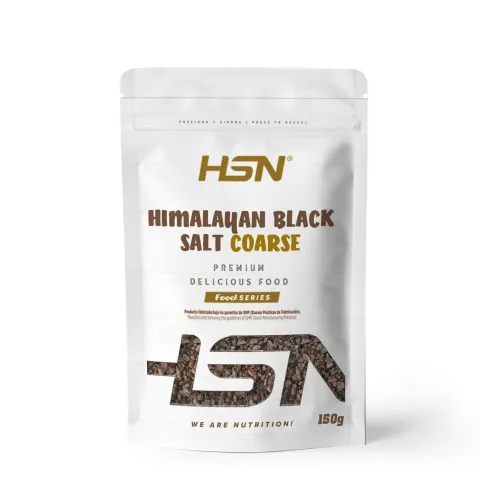
Himalayan Black Salt from FoodSeries is a natural food made exclusively from the black variety of Himalayan Salt, a source of calcium and magnesium, available in fine and coarse formats.
Himalayan Black Salt, also known as Kala Namak, is a mineral salt of volcanic origin traditionally used in South Asian cooking. Its distinctive dark color, unique natural aroma, and its intense fried egg flavor set it apart from other salts, offering a unique organoleptic profile highly valued in gastronomy. Its use is widespread due to its ability to enhance the flavor of foods in a unique way, especially in vegan recipes, spiced dishes, and preparations with a healthy or gourmet focus.
Refresh your kitchen with Himalayan black salt!
Origin and unique traits of a volcanic salt
An unmistakable organoleptic profile
Himalayan Black Salt is mined from underground deposits in the Indo-Gangetic region, formed by ancient geological volcanic processes. Unlike common salt, this variety is not chemically refined and retains its original mineral composition, which directly affects its appearance, smell, and taste.
Its dark hue, ranging from deep pink to dark gray with violet shades (although it is generally called 'black salt' for uniformity), comes from the natural presence of sulfur compounds, which are also responsible for its distinctive aroma, and its characteristic flavor. This very peculiar organoleptic profile makes black salt a distinctive ingredient, able to add complexity and authenticity to recipes that demand character and originality.
Ancient tradition and current culinary use
Himalayan Black Salt has been part of the culinary and traditional culture of the Indian subcontinent for centuries, especially in traditional systems like Ayurveda, where it was valued for its properties and its more special profile compared to common salt. Its ancestral use focused both on cooking and artisanal preparations, from chutneys and pickles to spiced infusions.
Today, this salt has established itself as an essential ingredient in vegan and healthy cooking. Also, its popularity has grown among chefs and food lovers for its ability to bring a deep, complex, and surprising umami note, elevating simple dishes to a higher culinary level.
Culinary applications: much more than an exotic salt
Perfect for vegan, Asian, and keto/paleo recipes
Himalayan Black Salt stands out in cooking for its unique fried egg flavor, so its true potential is revealed when integrated into specific recipes where its aroma and taste make a difference. In Asian cuisine, it’s a key ingredient in spice blends like chaat masala, as well as in sauces, soups, and sweet-and-sour dishes.
In vegan cooking, it has become a must-have to achieve deeper flavors in dishes without animal ingredients. It’s especially effective in preparations like scrambled tofu, vegan mayonnaises, savory doughs, eggless omelets, or legume salads with umami touches.
Plus, it’s perfectly compatible with low-carb diets like keto and paleo, adding flavor without calories or processed ingredients. Its versatility and character make it a gourmet tool to enhance everything from simple dishes to sophisticated culinary creations.
How to use it: textures and usage tips
Himalayan Black Salt comes in granulometries (fine and coarse) that let you adapt its use to different techniques and culinary preferences. It’s ideal for sprinkling directly on dishes at the end of cooking, where its aromatic intensity stays intact and adds a distinctive finish. It’s perfect for recipes like salads, sauces, hummus, vegetable pâtés, or vegetable side dishes.
The coarse version, on the other hand, is designed to be used during preparation or ground to taste in mills, used as a finishing salt, or even as part of marinades, savory doughs, or long cooking processes where the aroma softens gradually.
It’s recommended to start with small amounts and adjust to taste, since its profile is more intense and penetrating than common salt. In particular, using it cold or at the end of preparation enhances its characteristic flavor, while in long cooking its taste integrates more subtly and balanced.
Fine or coarse texture—which one to choose?
The choice between fine or coarse black salt depends on the intended use and the result you want to achieve in each preparation.
The fine texture is the most practical for immediate and even use. It dissolves easily and allows precise flavor distribution, making it especially suitable for seasoning dishes directly when serving, like salads, snacks, fruits, or spreads. It’s also the best option for those seeking a more direct and pronounced sensory experience of its flavor profile.
On the other hand, the coarse texture better preserves aromatic nuances over time and is ideal for those who prefer to grind the salt fresh when using it, customizing the intensity and freshness of the flavor. It’s also useful in more technical applications like marinades, pickles, doughs, seasoning plant-based meats, or as a presentation salt on boards and plating.
Both granulometries offer the same quality and purity but provide different experiences in the kitchen. That’s why many users choose to have both versions depending on the context and type of recipe.
Quality, safety, and dietary compatibility: at HSN
At HSN we select our Himalayan Black Salt under strict quality, purity, and traceability criteria. Sourced from controlled natural deposits and processed without chemical treatments or additives, we guarantee a 100% natural product, free from any added ingredients.
This product contains no allergens, is not genetically modified, and includes no animal-derived ingredients, so it’s perfectly compatible with vegan diets, as well as keto, paleo, gluten-free, or ultra-processed-free eating plans.
At HSN we prioritize transparency, quality, and rigor, providing you with truthful, clear, and relevant information about every product you can take home.